About
The story is the infrastructure.
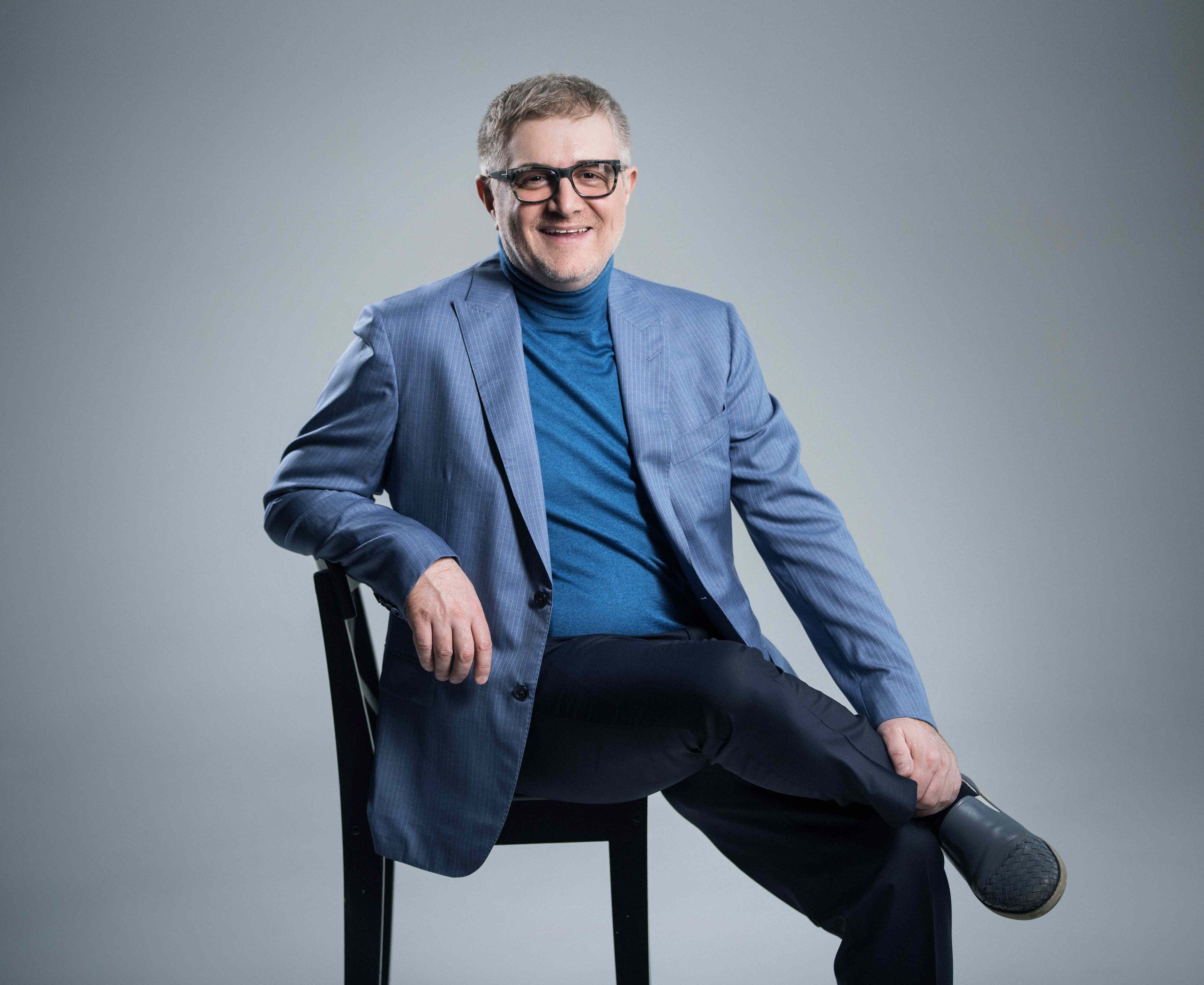
Zurab Ashvil has built financial infrastructure in three decades and on three continents. The through-line is simpler than it looks: every piece of infrastructure he has built was designed to become sovereign. Some have. One is in the process.
He was born in Tbilisi in 1971, into the last Soviet generation of Georgian intellectuals. He completed a doctorate in Cybernetics and Applied Mathematics at Tbilisi State University, and later an executive program in Computer Systems Technology at Harvard Business School. At twenty, he founded the Georgian-Jewish House — the first non-governmental organization in the newly independent Republic of Georgia. It grew to more than fifty thousand members. That was his first lesson in how institutions absorb what they cannot build.
In 1992, at twenty-one, he created the Tbilisi Interbank Currency Exchange. Georgia had been independent for less than a year. The country had no functioning foreign exchange market, no benchmark rates, no interbank liquidity. TICEX organized trading in foreign currencies, established daily benchmark exchange rates, and became the reference infrastructure for every bank operating in the Georgian economy. Within a decade it was absorbed by the National Bank of Georgia as a national institution. It remains the only instance of privately created financial infrastructure becoming sovereign national infrastructure in Georgia's post-independence history. He was twenty-one.
“He was twenty-one when TICEX was built. He has been building infrastructure that becomes sovereign ever since.”
In 1995, he joined SoftBank Capital in New York. He spent eleven years there, rising to Executive Director, responsible for the firm's start-up technology investments during a period in which SoftBank's partners were collectively responsible for billions of dollars in gains across Yahoo!, E*Trade, UT Starcom, GeoCities, and GSI Commerce. It was the education in institutional capital that the Tbilisi years could not provide. He left in 2006.
He founded Proluck Inc. the same year — a management consulting firm delivering enterprise software architecture and technology strategy to Fortune 500 clients. Proluck's engagements included JPMorgan, ING, Morgan Stanley, Priceline, and the preparation of Lehman Brothers' technology assets for sale during its SIPC liquidation. By 2010 he was building his own instruments again: Blagodaru, a Russian fintech firm developing automated cash-back investment products. He exited Blagodaru in 2013 at seven times invested capital. That was the year he began work on the standard.
The Standard
A system that behaves deterministically under regulation.
Between 2013 and 2020, he led the development of L3COS — a blockchain-based operating system designed for regulated economies. The work spanned eight years and involved more than 1,200 programmers worldwide. L3COS introduced a three-tier consensus architecture — Proof of Government, Delegated Proof of Stake, and Proof of Storage — under a single ledger. The platform was officially launched at the World Economic Forum in Davos in January 2020.
In 2021, L3COS launched Fiat-on-Chain, the first on-chain fiat currency product placing GBP, EUR, and USD on distributed ledger infrastructure with total value safeguarded by central banks. Launch partners included AgriDex — an $85 million agricultural marketplace — and ENT Global / TITLE 9, a $110 million digital rights management platform for music and film, later acquired by Eros Investments.
Through the L3COS years, a narrower and more durable idea was forming. It was not the operating system that would travel. It was the behavioral layer inside it — the rules that told regulated assets how to behave under compliance, identity, and governance constraints. That behavioral layer, refined across thirteen years and four production deployments, became L3RS-1.
The Present
Three implementations, one standard, all live.
In 2025, he founded T3RRA Ltd — the agentic settlement layer for compliant capital markets and the first production implementation of L3RS-1 at institutional scale. T3RRA replaces the function of a capital-markets deal desk, structuring, encoding, and settling tokenized real-world assets end-to-end with cryptographic compliance, formal matching, admissible routing, and a cross-chain certificate backed by mathematical proof.
The same year he co-founded Aurum Capital Partners in Tbilisi, structuring Georgian HNWI residency and zero-tax wealth management for entrepreneurs, family offices, and multi-jurisdiction investors, built on the same protocol-enforced compliance infrastructure.
In February 2026, he published L3RS-1 as an open standard through the L3RS Foundation. The standard is maintained royalty-free. Verified early deployments predating the public release include the Bank of England CBDC sandbox (June 2020), AgriDex (October 2020), Fiat-on-Chain (August 2022), and CleverJet (February 2024). It is the first regulated-asset behavioral standard with a production track record that precedes its standardization.
The Arc
Privately built. Sovereignly absorbed. Built again.
In 1992, he built an exchange that became a national institution. In 2026, he is building a standard that is designed to become a global one. The interval is thirty-four years. The pattern is the same.